|
SETestKCL
1.0.
|


All Classes Namespaces Files Functions Variables Typedefs Enumerations Enumerator Friends Macros Pages
|
SETestKCL
1.0.
|
#include <qcustomplot.h>
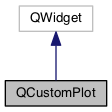
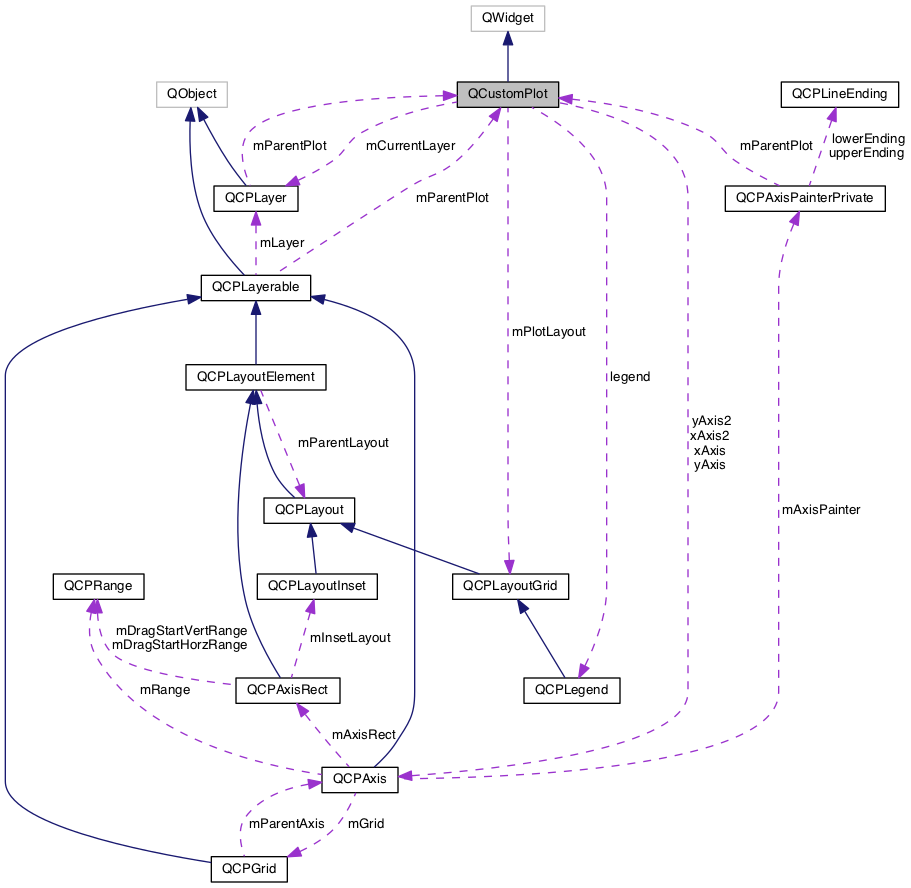
Public Types | |
| enum | LayerInsertMode { limBelow, limAbove } |
| enum | RefreshPriority { rpImmediate, rpQueued, rpHint } |
Signals | |
| void | mouseDoubleClick (QMouseEvent *event) |
| void | mousePress (QMouseEvent *event) |
| void | mouseMove (QMouseEvent *event) |
| void | mouseRelease (QMouseEvent *event) |
| void | mouseWheel (QWheelEvent *event) |
| void | plottableClick (QCPAbstractPlottable *plottable, QMouseEvent *event) |
| void | plottableDoubleClick (QCPAbstractPlottable *plottable, QMouseEvent *event) |
| void | itemClick (QCPAbstractItem *item, QMouseEvent *event) |
| void | itemDoubleClick (QCPAbstractItem *item, QMouseEvent *event) |
| void | axisClick (QCPAxis *axis, QCPAxis::SelectablePart part, QMouseEvent *event) |
| void | axisDoubleClick (QCPAxis *axis, QCPAxis::SelectablePart part, QMouseEvent *event) |
| void | legendClick (QCPLegend *legend, QCPAbstractLegendItem *item, QMouseEvent *event) |
| void | legendDoubleClick (QCPLegend *legend, QCPAbstractLegendItem *item, QMouseEvent *event) |
| void | titleClick (QMouseEvent *event, QCPPlotTitle *title) |
| void | titleDoubleClick (QMouseEvent *event, QCPPlotTitle *title) |
| void | selectionChangedByUser () |
| void | beforeReplot () |
| void | afterReplot () |
Public Member Functions | |
| QCustomPlot (QWidget *parent=0) | |
| virtual | ~QCustomPlot () |
| QRect | viewport () const |
| QPixmap | background () const |
| bool | backgroundScaled () const |
| Qt::AspectRatioMode | backgroundScaledMode () const |
| QCPLayoutGrid * | plotLayout () const |
| QCP::AntialiasedElements | antialiasedElements () const |
| QCP::AntialiasedElements | notAntialiasedElements () const |
| bool | autoAddPlottableToLegend () const |
| const QCP::Interactions | interactions () const |
| int | selectionTolerance () const |
| bool | noAntialiasingOnDrag () const |
| QCP::PlottingHints | plottingHints () const |
| Qt::KeyboardModifier | multiSelectModifier () const |
| void | setViewport (const QRect &rect) |
| void | setBackground (const QPixmap &pm) |
| void | setBackground (const QPixmap &pm, bool scaled, Qt::AspectRatioMode mode=Qt::KeepAspectRatioByExpanding) |
| void | setBackground (const QBrush &brush) |
| void | setBackgroundScaled (bool scaled) |
| void | setBackgroundScaledMode (Qt::AspectRatioMode mode) |
| void | setAntialiasedElements (const QCP::AntialiasedElements &antialiasedElements) |
| void | setAntialiasedElement (QCP::AntialiasedElement antialiasedElement, bool enabled=true) |
| void | setNotAntialiasedElements (const QCP::AntialiasedElements ¬AntialiasedElements) |
| void | setNotAntialiasedElement (QCP::AntialiasedElement notAntialiasedElement, bool enabled=true) |
| void | setAutoAddPlottableToLegend (bool on) |
| void | setInteractions (const QCP::Interactions &interactions) |
| void | setInteraction (const QCP::Interaction &interaction, bool enabled=true) |
| void | setSelectionTolerance (int pixels) |
| void | setNoAntialiasingOnDrag (bool enabled) |
| void | setPlottingHints (const QCP::PlottingHints &hints) |
| void | setPlottingHint (QCP::PlottingHint hint, bool enabled=true) |
| void | setMultiSelectModifier (Qt::KeyboardModifier modifier) |
| QCPAbstractPlottable * | plottable (int index) |
| QCPAbstractPlottable * | plottable () |
| bool | addPlottable (QCPAbstractPlottable *plottable) |
| bool | removePlottable (QCPAbstractPlottable *plottable) |
| bool | removePlottable (int index) |
| int | clearPlottables () |
| int | plottableCount () const |
| QList< QCPAbstractPlottable * > | selectedPlottables () const |
| QCPAbstractPlottable * | plottableAt (const QPointF &pos, bool onlySelectable=false) const |
| bool | hasPlottable (QCPAbstractPlottable *plottable) const |
| QCPGraph * | graph (int index) const |
| QCPGraph * | graph () const |
| QCPGraph * | addGraph (QCPAxis *keyAxis=0, QCPAxis *valueAxis=0) |
| bool | removeGraph (QCPGraph *graph) |
| bool | removeGraph (int index) |
| int | clearGraphs () |
| int | graphCount () const |
| QList< QCPGraph * > | selectedGraphs () const |
| QCPAbstractItem * | item (int index) const |
| QCPAbstractItem * | item () const |
| bool | addItem (QCPAbstractItem *item) |
| bool | removeItem (QCPAbstractItem *item) |
| bool | removeItem (int index) |
| int | clearItems () |
| int | itemCount () const |
| QList< QCPAbstractItem * > | selectedItems () const |
| QCPAbstractItem * | itemAt (const QPointF &pos, bool onlySelectable=false) const |
| bool | hasItem (QCPAbstractItem *item) const |
| QCPLayer * | layer (const QString &name) const |
| QCPLayer * | layer (int index) const |
| QCPLayer * | currentLayer () const |
| bool | setCurrentLayer (const QString &name) |
| bool | setCurrentLayer (QCPLayer *layer) |
| int | layerCount () const |
| bool | addLayer (const QString &name, QCPLayer *otherLayer=0, LayerInsertMode insertMode=limAbove) |
| bool | removeLayer (QCPLayer *layer) |
| bool | moveLayer (QCPLayer *layer, QCPLayer *otherLayer, LayerInsertMode insertMode=limAbove) |
| int | axisRectCount () const |
| QCPAxisRect * | axisRect (int index=0) const |
| QList< QCPAxisRect * > | axisRects () const |
| QCPLayoutElement * | layoutElementAt (const QPointF &pos) const |
| Q_SLOT void | rescaleAxes (bool onlyVisiblePlottables=false) |
| QList< QCPAxis * > | selectedAxes () const |
| QList< QCPLegend * > | selectedLegends () const |
| Q_SLOT void | deselectAll () |
| bool | savePdf (const QString &fileName, bool noCosmeticPen=false, int width=0, int height=0, const QString &pdfCreator=QString(), const QString &pdfTitle=QString()) |
| bool | savePng (const QString &fileName, int width=0, int height=0, double scale=1.0, int quality=-1) |
| bool | saveJpg (const QString &fileName, int width=0, int height=0, double scale=1.0, int quality=-1) |
| bool | saveBmp (const QString &fileName, int width=0, int height=0, double scale=1.0) |
| bool | saveRastered (const QString &fileName, int width, int height, double scale, const char *format, int quality=-1) |
| QPixmap | toPixmap (int width=0, int height=0, double scale=1.0) |
| void | toPainter (QCPPainter *painter, int width=0, int height=0) |
| Q_SLOT void | replot (QCustomPlot::RefreshPriority refreshPriority=QCustomPlot::rpHint) |
Public Attributes | |
| QCPAxis * | xAxis |
| QCPAxis * | yAxis |
| QCPAxis * | xAxis2 |
| QCPAxis * | yAxis2 |
| QCPLegend * | legend |
Protected Member Functions | |
| virtual QSize | minimumSizeHint () const |
| virtual QSize | sizeHint () const |
| virtual void | paintEvent (QPaintEvent *event) |
| virtual void | resizeEvent (QResizeEvent *event) |
| virtual void | mouseDoubleClickEvent (QMouseEvent *event) |
| virtual void | mousePressEvent (QMouseEvent *event) |
| virtual void | mouseMoveEvent (QMouseEvent *event) |
| virtual void | mouseReleaseEvent (QMouseEvent *event) |
| virtual void | wheelEvent (QWheelEvent *event) |
| virtual void | draw (QCPPainter *painter) |
| virtual void | axisRemoved (QCPAxis *axis) |
| virtual void | legendRemoved (QCPLegend *legend) |
| void | updateLayerIndices () const |
| QCPLayerable * | layerableAt (const QPointF &pos, bool onlySelectable, QVariant *selectionDetails=0) const |
| void | drawBackground (QCPPainter *painter) |
Protected Attributes | |
| QRect | mViewport |
| QCPLayoutGrid * | mPlotLayout |
| bool | mAutoAddPlottableToLegend |
| QList< QCPAbstractPlottable * > | mPlottables |
| QList< QCPGraph * > | mGraphs |
| QList< QCPAbstractItem * > | mItems |
| QList< QCPLayer * > | mLayers |
| QCP::AntialiasedElements | mAntialiasedElements |
| QCP::AntialiasedElements | mNotAntialiasedElements |
| QCP::Interactions | mInteractions |
| int | mSelectionTolerance |
| bool | mNoAntialiasingOnDrag |
| QBrush | mBackgroundBrush |
| QPixmap | mBackgroundPixmap |
| QPixmap | mScaledBackgroundPixmap |
| bool | mBackgroundScaled |
| Qt::AspectRatioMode | mBackgroundScaledMode |
| QCPLayer * | mCurrentLayer |
| QCP::PlottingHints | mPlottingHints |
| Qt::KeyboardModifier | mMultiSelectModifier |
| QPixmap | mPaintBuffer |
| QPoint | mMousePressPos |
| QPointer< QCPLayoutElement > | mMouseEventElement |
| bool | mReplotting |
Friends | |
| class | QCPLegend |
| class | QCPAxis |
| class | QCPLayer |
| class | QCPAxisRect |
The central class of the library. This is the QWidget which displays the plot and interacts with the user.
For tutorials on how to use QCustomPlot, see the website
http://www.qcustomplot.com/
Definition at line 1680 of file qcustomplot.h.
| enum LayerInsertMode |
Defines how a layer should be inserted relative to an other layer.
| Enumerator | |
|---|---|
| limBelow |
Layer is inserted below other layer. |
| limAbove |
Layer is inserted above other layer. |
Definition at line 1700 of file qcustomplot.h.
| enum RefreshPriority |
Defines with what timing the QCustomPlot surface is refreshed after a replot.
| Enumerator | |
|---|---|
| rpImmediate |
The QCustomPlot surface is immediately refreshed, by calling QWidget::repaint() after the replot. |
| rpQueued |
Queues the refresh such that it is performed at a slightly delayed point in time after the replot, by calling QWidget::update() after the replot. |
| rpHint |
Whether to use immediate repaint or queued update depends on whether the plotting hint QCP::phForceRepaint is set, see setPlottingHints. |
Definition at line 1710 of file qcustomplot.h.
|
explicit |
Constructs a QCustomPlot and sets reasonable default values.
Definition at line 9017 of file qcustomplot.cpp.
References QCPLayoutGrid::addElement(), QCPLayoutInset::addElement(), QCPAxis::atBottom, QCPAxis::atLeft, QCPAxis::atRight, QCPAxis::atTop, QCPAxisRect::axis(), QCPAxis::grid(), QCPLayerable::initializeParentPlot(), QCPAxisRect::insetLayout(), legend, mLayers, mPlotLayout, QCPAxisRect, QCPLayer, QCPLegend, replot(), setCurrentLayer(), QCPLayerable::setLayer(), QCPLayoutElement::setMargins(), setViewport(), QCPLayerable::setVisible(), updateLayerIndices(), xAxis, xAxis2, yAxis, and yAxis2.
|
virtual |
Definition at line 9089 of file qcustomplot.cpp.
References clearItems(), clearPlottables(), mCurrentLayer, mLayers, and mPlotLayout.
Creates a new graph inside the plot. If keyAxis and valueAxis are left unspecified (0), the bottom (xAxis) is used as key and the left (yAxis) is used as value axis. If specified, keyAxis and valueAxis must reside in this QCustomPlot.
keyAxis will be used as key axis (typically "x") and valueAxis as value axis (typically "y") for the graph.
Returns a pointer to the newly created graph, or 0 if adding the graph failed.
Definition at line 9697 of file qcustomplot.cpp.
References addPlottable(), mGraphs, QCPLayerable::parentPlot(), QCPAbstractPlottable::setName(), xAxis, and yAxis.
| bool addItem | ( | QCPAbstractItem * | item | ) |
Adds the specified item to the plot. QCustomPlot takes ownership of the item.
Returns true on success, i.e. when item wasn't already in the plot and the parent plot of item is this QCustomPlot.
Definition at line 9838 of file qcustomplot.cpp.
References item(), mItems, and QCPLayerable::parentPlot().
| bool addLayer | ( | const QString & | name, |
| QCPLayer * | otherLayer = 0, |
||
| QCustomPlot::LayerInsertMode | insertMode = limAbove |
||
| ) |
Adds a new layer to this QCustomPlot instance. The new layer will have the name name, which must be unique. Depending on insertMode, it is positioned either below or above otherLayer.
Returns true on success, i.e. if there is no other layer named name and otherLayer is a valid layer inside this QCustomPlot.
If otherLayer is 0, the highest layer in the QCustomPlot will be used.
For an explanation of what layers are in QCustomPlot, see the documentation of QCPLayer.
Definition at line 10083 of file qcustomplot.cpp.
References QCPLayer::index(), layer(), limAbove, mLayers, QCPLayer, and updateLayerIndices().
| bool addPlottable | ( | QCPAbstractPlottable * | plottable | ) |
Adds the specified plottable to the plot and, if setAutoAddPlottableToLegend is enabled, to the legend (QCustomPlot::legend). QCustomPlot takes ownership of the plottable.
Returns true on success, i.e. when plottable isn't already in the plot and the parent plot of plottable is this QCustomPlot (the latter is controlled by what axes were passed in the plottable's constructor).
Definition at line 9495 of file qcustomplot.cpp.
References QCPAbstractPlottable::addToLegend(), currentLayer(), graph(), QCPLayerable::layer(), mAutoAddPlottableToLegend, mGraphs, mPlottables, QCPLayerable::parentPlot(), plottable(), and QCPLayerable::setLayer().
Referenced by addGraph().
|
signal |
This signal is emitted immediately after a replot has taken place (caused by a call to the slot replot).
It is safe to mutually connect the replot slot with this signal on two QCustomPlots to make them replot synchronously, it won't cause an infinite recursion.
Referenced by replot().
|
inline |
Definition at line 1724 of file qcustomplot.h.
Referenced by QCPLayerable::applyAntialiasingHint(), QCPAxisRect::mousePressEvent(), and setAntialiasedElements().
|
inline |
Definition at line 1726 of file qcustomplot.h.
|
signal |
This signal is emitted when an axis is clicked.
event is the mouse event that caused the click, axis is the axis that received the click and part indicates the part of the axis that was clicked.
Referenced by mouseReleaseEvent().
|
signal |
This signal is emitted when an axis is double clicked.
event is the mouse event that caused the click, axis is the axis that received the click and part indicates the part of the axis that was clicked.
Referenced by mouseDoubleClickEvent().
| QCPAxisRect * axisRect | ( | int | index = 0 | ) | const |
Returns the axis rect with index.
Initially, only one axis rect (with index 0) exists in the plot. If multiple axis rects were added, all of them may be accessed with this function in a linear fashion (even when they are nested in a layout hierarchy or inside other axis rects via QCPAxisRect::insetLayout).
Definition at line 10209 of file qcustomplot.cpp.
References axisRects().
Referenced by QCPAbstractItem::createPosition().
| int axisRectCount | ( | ) | const |
Returns the number of axis rects in the plot.
All axis rects can be accessed via QCustomPlot::axisRect().
Initially, only one axis rect exists in the plot.
Definition at line 10195 of file qcustomplot.cpp.
References axisRects().
| QList< QCPAxisRect * > axisRects | ( | ) | const |
Returns all axis rects in the plot.
Definition at line 10227 of file qcustomplot.cpp.
References QCPLayoutElement::elements(), and mPlotLayout.
Referenced by axisRect(), axisRectCount(), QCPAbstractItem::QCPAbstractItem(), rescaleAxes(), and selectedAxes().
|
protectedvirtual |
Definition at line 10957 of file qcustomplot.cpp.
References xAxis, xAxis2, yAxis, and yAxis2.
Referenced by QCPAxisRect::removeAxis().
|
inline |
Definition at line 1720 of file qcustomplot.h.
|
inline |
Definition at line 1721 of file qcustomplot.h.
|
inline |
Definition at line 1722 of file qcustomplot.h.
|
signal |
This signal is emitted immediately before a replot takes place (caused by a call to the slot replot).
It is safe to mutually connect the replot slot with this signal on two QCustomPlots to make them replot synchronously, it won't cause an infinite recursion.
Referenced by replot().
| int clearGraphs | ( | ) |
Removes all graphs from the plot (and the QCustomPlot::legend, if necessary).
Returns the number of graphs removed.
Definition at line 9757 of file qcustomplot.cpp.
References mGraphs, and removeGraph().
| int clearItems | ( | ) |
Removes all items from the plot.
Returns the number of items removed.
Definition at line 9894 of file qcustomplot.cpp.
References mItems, and removeItem().
Referenced by ~QCustomPlot().
| int clearPlottables | ( | ) |
Removes all plottables from the plot (and the QCustomPlot::legend, if necessary).
Returns the number of plottables removed.
Definition at line 9568 of file qcustomplot.cpp.
References mPlottables, and removePlottable().
Referenced by ~QCustomPlot().
| QCPLayer * currentLayer | ( | ) | const |
Returns the layer that is set as current layer (see setCurrentLayer).
Definition at line 10013 of file qcustomplot.cpp.
References mCurrentLayer.
Referenced by addPlottable(), QCPAxis::QCPAxis(), QCPLayerable::QCPLayerable(), QCPPlotTitle::QCPPlotTitle(), and QCPLayer::~QCPLayer().
| void deselectAll | ( | ) |
Deselects all layerables (plottables, items, axes, legends,...) of the QCustomPlot.
Since calling this function is not a user interaction, this does not emit the selectionChangedByUser signal. The individual selectionChanged signals are emitted though, if the objects were previously selected.
Definition at line 10344 of file qcustomplot.cpp.
References QCPLayer::children(), QCPLayerable::deselectEvent(), layer(), and mLayers.
|
protectedvirtual |
Definition at line 10874 of file qcustomplot.cpp.
References QCPLayerable::applyDefaultAntialiasingHint(), QCPLayer::children(), QCPLayerable::clipRect(), QCPLayerable::draw(), drawBackground(), layer(), mLayers, mPlotLayout, QCPLayerable::realVisibility(), QCPPainter::restore(), QCPPainter::save(), QCPLayout::update(), QCPLayoutElement::upLayout, QCPLayoutElement::upMargins, and QCPLayoutElement::upPreparation.
Referenced by replot(), savePdf(), toPainter(), and toPixmap().
|
protected |
Definition at line 10929 of file qcustomplot.cpp.
References mBackgroundPixmap, mBackgroundScaled, mBackgroundScaledMode, mScaledBackgroundPixmap, and mViewport.
Referenced by draw().
| QCPGraph * graph | ( | int | index | ) | const |
Returns the graph with index. If the index is invalid, returns 0.
There is an overloaded version of this function with no parameter which returns the last created graph, see QCustomPlot::graph()
Definition at line 9657 of file qcustomplot.cpp.
References mGraphs.
Referenced by MainWindow::UpdateSummary().
| QCPGraph * graph | ( | ) | const |
This is an overloaded member function, provided for convenience. It differs from the above function only in what argument(s) it accepts.
Returns the last graph, that was created with addGraph. If there are no graphs in the plot, returns 0.
Definition at line 9676 of file qcustomplot.cpp.
References mGraphs.
Referenced by addPlottable(), removePlottable(), and selectedGraphs().
| int graphCount | ( | ) | const |
Returns the number of currently existing graphs in the plot
Definition at line 9770 of file qcustomplot.cpp.
References mGraphs.
| bool hasItem | ( | QCPAbstractItem * | item | ) | const |
Returns whether this QCustomPlot contains the item.
Definition at line 9969 of file qcustomplot.cpp.
References mItems.
| bool hasPlottable | ( | QCPAbstractPlottable * | plottable | ) | const |
Returns whether this QCustomPlot instance contains the plottable.
Definition at line 9644 of file qcustomplot.cpp.
References mPlottables.
Referenced by QCPItemTracer::updatePosition().
|
inline |
Definition at line 1727 of file qcustomplot.h.
Referenced by QCPAxisRect::mouseMoveEvent(), QCPAxisRect::mousePressEvent(), setInteractions(), and QCPAxisRect::wheelEvent().
| QCPAbstractItem * item | ( | int | index | ) | const |
Returns the item with index. If the index is invalid, returns 0.
There is an overloaded version of this function with no parameter which returns the last added item, see QCustomPlot::item()
Definition at line 9802 of file qcustomplot.cpp.
References mItems.
| QCPAbstractItem * item | ( | ) | const |
This is an overloaded member function, provided for convenience. It differs from the above function only in what argument(s) it accepts.
Returns the last item, that was added with addItem. If there are no items in the plot, returns 0.
Definition at line 9821 of file qcustomplot.cpp.
References mItems.
Referenced by addItem(), itemAt(), removeItem(), and selectedItems().
| QCPAbstractItem * itemAt | ( | const QPointF & | pos, |
| bool | onlySelectable = false |
||
| ) | const |
Returns the item at the pixel position pos. Items that only consist of single lines (e.g. QCPItemLine or QCPItemCurve) have a tolerance band around them, see setSelectionTolerance. If multiple items come into consideration, the one closest to pos is returned.
If onlySelectable is true, only items that are selectable (QCPAbstractItem::setSelectable) are considered.
If there is no item at pos, the return value is 0.
Definition at line 9941 of file qcustomplot.cpp.
References QCPAbstractItem::clipRect(), QCPAbstractItem::clipToAxisRect(), item(), mItems, mSelectionTolerance, QCPAbstractItem::selectable(), and QCPAbstractItem::selectTest().
|
signal |
This signal is emitted when an item is clicked.
event is the mouse event that caused the click and item is the item that received the click.
Referenced by mouseReleaseEvent().
| int itemCount | ( | ) | const |
Returns the number of currently existing items in the plot
Definition at line 9907 of file qcustomplot.cpp.
References mItems.
|
signal |
This signal is emitted when an item is double clicked.
event is the mouse event that caused the click and item is the item that received the click.
Referenced by mouseDoubleClickEvent().
| QCPLayer * layer | ( | const QString & | name | ) | const |
Returns the layer with the specified name. If there is no layer with the specified name, 0 is returned.
Layer names are case-sensitive.
Definition at line 9982 of file qcustomplot.cpp.
References mLayers, and QCPLayer::name().
Referenced by addLayer(), deselectAll(), draw(), mouseReleaseEvent(), moveLayer(), removeLayer(), setCurrentLayer(), and QCPLayerable::setLayer().
| QCPLayer * layer | ( | int | index | ) | const |
This is an overloaded member function, provided for convenience. It differs from the above function only in what argument(s) it accepts.
Returns the layer by index. If the index is invalid, 0 is returned.
Definition at line 9998 of file qcustomplot.cpp.
References mLayers.
|
protected |
Definition at line 11006 of file qcustomplot.cpp.
References mLayers, selectionTolerance(), and QCPLayerable::selectTest().
Referenced by mouseDoubleClickEvent(), and mouseReleaseEvent().
| int layerCount | ( | ) | const |
Returns the number of currently existing layers in the plot
Definition at line 10065 of file qcustomplot.cpp.
References mLayers.
| QCPLayoutElement * layoutElementAt | ( | const QPointF & | pos | ) | const |
Returns the layout element at pixel position pos. If there is no element at that position, returns 0.
Only visible elements are used. If QCPLayoutElement::setVisible on the element itself or on any of its parent elements is set to false, it will not be considered.
Definition at line 10259 of file qcustomplot.cpp.
References QCPLayoutElement::elements(), mPlotLayout, QCPLayerable::realVisibility(), and QCPLayoutElement::selectTest().
Referenced by mouseDoubleClickEvent(), mousePressEvent(), and wheelEvent().
|
signal |
This signal is emitted when a legend (item) is clicked.
event is the mouse event that caused the click, legend is the legend that received the click and item is the legend item that received the click. If only the legend and no item is clicked, item is 0. This happens for a click inside the legend padding or the space between two items.
Referenced by mouseReleaseEvent().
|
signal |
This signal is emitted when a legend (item) is double clicked.
event is the mouse event that caused the click, legend is the legend that received the click and item is the legend item that received the click. If only the legend and no item is clicked, item is 0. This happens for a click inside the legend padding or the space between two items.
Referenced by mouseDoubleClickEvent().
|
protectedvirtual |
Definition at line 10976 of file qcustomplot.cpp.
Referenced by QCPLegend::~QCPLegend().
|
protectedvirtual |
Definition at line 10637 of file qcustomplot.cpp.
References QCPLayoutGrid::minimumSizeHint(), and mPlotLayout.
|
signal |
This signal is emitted when the QCustomPlot receives a mouse double click event.
Referenced by mouseDoubleClickEvent().
|
protectedvirtual |
Definition at line 10687 of file qcustomplot.cpp.
References axisDoubleClick(), itemDoubleClick(), layerableAt(), layoutElementAt(), legendDoubleClick(), mMouseEventElement, mouseDoubleClick(), plottableDoubleClick(), and titleDoubleClick().
|
signal |
This signal is emitted when the QCustomPlot receives a mouse move event.
It is emitted before QCustomPlot handles any other mechanism like range dragging. So a slot connected to this signal can still influence the behaviour e.g. with QCPAxisRect::setRangeDrag or QCPAxisRect::setRangeDragAxes.
Referenced by mouseMoveEvent().
|
protectedvirtual |
Definition at line 10751 of file qcustomplot.cpp.
References mMouseEventElement, and mouseMove().
|
signal |
This signal is emitted when the QCustomPlot receives a mouse press event.
It is emitted before QCustomPlot handles any other mechanism like range dragging. So a slot connected to this signal can still influence the behaviour e.g. with QCPAxisRect::setRangeDrag or QCPAxisRect::setRangeDragAxes.
Referenced by mousePressEvent().
|
protectedvirtual |
Definition at line 10729 of file qcustomplot.cpp.
References layoutElementAt(), mMouseEventElement, mMousePressPos, and mousePress().
|
signal |
This signal is emitted when the QCustomPlot receives a mouse release event.
It is emitted before QCustomPlot handles any other mechanisms like object selection. So a slot connected to this signal can still influence the behaviour e.g. with setInteractions or QCPAbstractPlottable::setSelectable.
Referenced by mouseReleaseEvent().
|
protectedvirtual |
Definition at line 10776 of file qcustomplot.cpp.
References axisClick(), QCPLayer::children(), QCPLayerable::deselectEvent(), QCP::iMultiSelect, itemClick(), layer(), layerableAt(), legendClick(), mInteractions, mLayers, mMouseEventElement, mMousePressPos, mMultiSelectModifier, mouseRelease(), noAntialiasingOnDrag(), plottableClick(), replot(), QCPLayerable::selectEvent(), QCPLayerable::selectionCategory(), selectionChangedByUser(), and titleClick().
|
signal |
This signal is emitted when the QCustomPlot receives a mouse wheel event.
It is emitted before QCustomPlot handles any other mechanisms like range zooming. So a slot connected to this signal can still influence the behaviour e.g. with QCPAxisRect::setRangeZoom, QCPAxisRect::setRangeZoomAxes or QCPAxisRect::setRangeZoomFactor.
Referenced by wheelEvent().
| bool moveLayer | ( | QCPLayer * | layer, |
| QCPLayer * | otherLayer, | ||
| QCustomPlot::LayerInsertMode | insertMode = limAbove |
||
| ) |
Moves the specified layer either above or below otherLayer. Whether it's placed above or below is controlled with insertMode.
Returns true on success, i.e. when both layer and otherLayer are valid layers in the QCustomPlot.
Definition at line 10164 of file qcustomplot.cpp.
References QCPLayer::index(), layer(), limAbove, mLayers, and updateLayerIndices().
|
inline |
Definition at line 1731 of file qcustomplot.h.
|
inline |
Definition at line 1729 of file qcustomplot.h.
Referenced by QCPAxisRect::mouseMoveEvent(), QCPAxisRect::mousePressEvent(), mouseReleaseEvent(), and QCPAxisRect::mouseReleaseEvent().
|
inline |
Definition at line 1725 of file qcustomplot.h.
Referenced by QCPLayerable::applyAntialiasingHint(), QCPAxisRect::mousePressEvent(), and setNotAntialiasedElements().
|
protectedvirtual |
Definition at line 10657 of file qcustomplot.cpp.
References mPaintBuffer.
|
inline |
Returns the top level layout of this QCustomPlot instance. It is a QCPLayoutGrid, initially containing just one cell with the main QCPAxisRect inside.
Definition at line 1723 of file qcustomplot.h.
| QCPAbstractPlottable * plottable | ( | int | index | ) |
Returns the plottable with index. If the index is invalid, returns 0.
There is an overloaded version of this function with no parameter which returns the last added plottable, see QCustomPlot::plottable()
Definition at line 9457 of file qcustomplot.cpp.
References mPlottables.
Referenced by QCPColorScale::colorMaps().
| QCPAbstractPlottable * plottable | ( | ) |
This is an overloaded member function, provided for convenience. It differs from the above function only in what argument(s) it accepts.
Returns the last plottable that was added with addPlottable. If there are no plottables in the plot, returns 0.
Definition at line 9476 of file qcustomplot.cpp.
References mPlottables.
Referenced by addPlottable(), plottableAt(), removePlottable(), and selectedPlottables().
| QCPAbstractPlottable * plottableAt | ( | const QPointF & | pos, |
| bool | onlySelectable = false |
||
| ) | const |
Returns the plottable at the pixel position pos. Plottables that only consist of single lines (like graphs) have a tolerance band around them, see setSelectionTolerance. If multiple plottables come into consideration, the one closest to pos is returned.
If onlySelectable is true, only plottables that are selectable (QCPAbstractPlottable::setSelectable) are considered.
If there is no plottable at pos, the return value is 0.
Definition at line 9616 of file qcustomplot.cpp.
References QCPAxis::axisRect(), QCPAbstractPlottable::keyAxis(), mPlottables, mSelectionTolerance, plottable(), QCPLayoutElement::rect(), QCPAbstractPlottable::selectable(), QCPAbstractPlottable::selectTest(), and QCPAbstractPlottable::valueAxis().
|
signal |
This signal is emitted when a plottable is clicked.
event is the mouse event that caused the click and plottable is the plottable that received the click.
Referenced by mouseReleaseEvent().
| int plottableCount | ( | ) | const |
Returns the number of currently existing plottables in the plot
Definition at line 9581 of file qcustomplot.cpp.
References mPlottables.
Referenced by QCPColorScale::colorMaps().
|
signal |
This signal is emitted when a plottable is double clicked.
event is the mouse event that caused the click and plottable is the plottable that received the click.
Referenced by mouseDoubleClickEvent().
|
inline |
Definition at line 1730 of file qcustomplot.h.
Referenced by QCPCurve::draw(), QCPGraph::drawLinePlot(), QCPAxisPainterPrivate::getMaxTickLabelSize(), and QCPAxisPainterPrivate::placeTickLabel().
| bool removeGraph | ( | QCPGraph * | graph | ) |
Removes the specified graph from the plot and, if necessary, from the QCustomPlot::legend. If any other graphs in the plot have a channel fill set towards the removed graph, the channel fill property of those graphs is reset to zero (no channel fill).
Returns true on success.
Definition at line 9733 of file qcustomplot.cpp.
References removePlottable().
Referenced by clearGraphs(), and removeGraph().
| bool removeGraph | ( | int | index | ) |
This is an overloaded member function, provided for convenience. It differs from the above function only in what argument(s) it accepts.
Removes the graph by its index.
Definition at line 9742 of file qcustomplot.cpp.
References mGraphs, and removeGraph().
| bool removeItem | ( | QCPAbstractItem * | item | ) |
Removes the specified item from the plot.
Returns true on success.
Definition at line 9858 of file qcustomplot.cpp.
References item(), and mItems.
Referenced by clearItems(), and removeItem().
| bool removeItem | ( | int | index | ) |
This is an overloaded member function, provided for convenience. It differs from the above function only in what argument(s) it accepts.
Removes the item by its index.
Definition at line 9876 of file qcustomplot.cpp.
References mItems, and removeItem().
| bool removeLayer | ( | QCPLayer * | layer | ) |
Removes the specified layer and returns true on success.
All layerables (e.g. plottables and items) on the removed layer will be moved to the layer below layer. If layer is the bottom layer, the layerables are moved to the layer above. In both cases, the total rendering order of all layerables in the QCustomPlot is preserved.
If layer is the current layer (setCurrentLayer), the layer below (or above, if bottom layer) becomes the new current layer.
It is not possible to remove the last layer of the plot.
Definition at line 10118 of file qcustomplot.cpp.
References QCPLayer::children(), QCPLayer::index(), layer(), mCurrentLayer, mLayers, setCurrentLayer(), and updateLayerIndices().
| bool removePlottable | ( | QCPAbstractPlottable * | plottable | ) |
Removes the specified plottable from the plot and, if necessary, from the legend (QCustomPlot::legend).
Returns true on success.
Definition at line 9527 of file qcustomplot.cpp.
References graph(), mGraphs, mPlottables, plottable(), and QCPAbstractPlottable::removeFromLegend().
Referenced by clearPlottables(), removeGraph(), and removePlottable().
| bool removePlottable | ( | int | index | ) |
This is an overloaded member function, provided for convenience. It differs from the above function only in what argument(s) it accepts.
Removes the plottable by its index.
Definition at line 9550 of file qcustomplot.cpp.
References mPlottables, and removePlottable().
| void replot | ( | QCustomPlot::RefreshPriority | refreshPriority = QCustomPlot::rpHint | ) |
Causes a complete replot into the internal buffer. Finally, update() is called, to redraw the buffer on the QCustomPlot widget surface. This is the method that must be called to make changes, for example on the axis ranges or data points of graphs, visible.
Under a few circumstances, QCustomPlot causes a replot by itself. Those are resize events of the QCustomPlot widget and user interactions (object selection and range dragging/zooming).
Before the replot happens, the signal beforeReplot is emitted. After the replot, afterReplot is emitted. It is safe to mutually connect the replot slot with any of those two signals on two QCustomPlots to make them replot synchronously, it won't cause an infinite recursion.
Definition at line 10366 of file qcustomplot.cpp.
References afterReplot(), beforeReplot(), QCPPainter::begin(), draw(), mBackgroundBrush, mPaintBuffer, mPlottingHints, mReplotting, mViewport, QCP::phForceRepaint, rpHint, and rpImmediate.
Referenced by QCPAxisRect::mouseMoveEvent(), mouseReleaseEvent(), QCustomPlot(), resizeEvent(), MainWindow::UpdateSummary(), and QCPAxisRect::wheelEvent().
| void rescaleAxes | ( | bool | onlyVisiblePlottables = false | ) |
Rescales the axes such that all plottables (like graphs) in the plot are fully visible.
if onlyVisiblePlottables is set to true, only the plottables that have their visibility set to true (QCPLayerable::setVisible), will be used to rescale the axes.
Definition at line 10402 of file qcustomplot.cpp.
References QCPAxisRect::axes(), axisRects(), and QCPAxis::rescale().
|
protectedvirtual |
Definition at line 10670 of file qcustomplot.cpp.
References mPaintBuffer, replot(), rpQueued, and setViewport().
| bool saveBmp | ( | const QString & | fileName, |
| int | width = 0, |
||
| int | height = 0, |
||
| double | scale = 1.0 |
||
| ) |
Saves a BMP image file to fileName on disc. The output plot will have the dimensions width and height in pixels. If either width or height is zero, the exported image will have the same dimensions as the QCustomPlot widget currently has. Line widths and texts etc. are not scaled up when larger widths/heights are used. If you want that effect, use the scale parameter.
For example, if you set both width and height to 100 and scale to 2, you will end up with an image file of size 200*200 in which all graphical elements are scaled up by factor 2 (line widths, texts, etc.). This scaling is not done by stretching a 100*100 image, the result will have full 200*200 pixel resolution.
If you use a high scaling factor, it is recommended to enable antialiasing for all elements via temporarily setting QCustomPlot::setAntialiasedElements to QCP::aeAll as this allows QCustomPlot to place objects with sub-pixel accuracy.
The objects of the plot will appear in the current selection state. If you don't want any selected objects to be painted in their selected look, deselect everything with deselectAll before calling this function.
Returns true on success. If this function fails, most likely the BMP format isn't supported by the system, see Qt docs about QImageWriter::supportedImageFormats().
Definition at line 10624 of file qcustomplot.cpp.
References saveRastered().
| bool saveJpg | ( | const QString & | fileName, |
| int | width = 0, |
||
| int | height = 0, |
||
| double | scale = 1.0, |
||
| int | quality = -1 |
||
| ) |
Saves a JPG image file to fileName on disc. The output plot will have the dimensions width and height in pixels. If either width or height is zero, the exported image will have the same dimensions as the QCustomPlot widget currently has. Line widths and texts etc. are not scaled up when larger widths/heights are used. If you want that effect, use the scale parameter.
For example, if you set both width and height to 100 and scale to 2, you will end up with an image file of size 200*200 in which all graphical elements are scaled up by factor 2 (line widths, texts, etc.). This scaling is not done by stretching a 100*100 image, the result will have full 200*200 pixel resolution.
If you use a high scaling factor, it is recommended to enable antialiasing for all elements via temporarily setting QCustomPlot::setAntialiasedElements to QCP::aeAll as this allows QCustomPlot to place objects with sub-pixel accuracy.
The objects of the plot will appear in the current selection state. If you don't want any selected objects to be painted in their selected look, deselect everything with deselectAll before calling this function.
JPG compression can be controlled with the quality parameter which must be between 0 and 100 or -1 to use the default setting.
Returns true on success. If this function fails, most likely the JPG format isn't supported by the system, see Qt docs about QImageWriter::supportedImageFormats().
Definition at line 10588 of file qcustomplot.cpp.
References saveRastered().
| bool savePdf | ( | const QString & | fileName, |
| bool | noCosmeticPen = false, |
||
| int | width = 0, |
||
| int | height = 0, |
||
| const QString & | pdfCreator = QString(), |
||
| const QString & | pdfTitle = QString() |
||
| ) |
Saves a PDF with the vectorized plot to the file fileName. The axis ratio as well as the scale of texts and lines will be derived from the specified width and height. This means, the output will look like the normal on-screen output of a QCustomPlot widget with the corresponding pixel width and height. If either width or height is zero, the exported image will have the same dimensions as the QCustomPlot widget currently has.
noCosmeticPen disables the use of cosmetic pens when drawing to the PDF file. Cosmetic pens are pens with numerical width 0, which are always drawn as a one pixel wide line, no matter what zoom factor is set in the PDF-Viewer. For more information about cosmetic pens, see the QPainter and QPen documentation.
The objects of the plot will appear in the current selection state. If you don't want any selected objects to be painted in their selected look, deselect everything with deselectAll before calling this function.
Returns true on success.
Definition at line 10449 of file qcustomplot.cpp.
References QCPPainter::begin(), draw(), mBackgroundBrush, mViewport, QCPPainter::pmNoCaching, QCPPainter::pmNonCosmetic, QCPPainter::pmVectorized, QCPPainter::setMode(), setViewport(), and viewport().
| bool savePng | ( | const QString & | fileName, |
| int | width = 0, |
||
| int | height = 0, |
||
| double | scale = 1.0, |
||
| int | quality = -1 |
||
| ) |
Saves a PNG image file to fileName on disc. The output plot will have the dimensions width and height in pixels. If either width or height is zero, the exported image will have the same dimensions as the QCustomPlot widget currently has. Line widths and texts etc. are not scaled up when larger widths/heights are used. If you want that effect, use the scale parameter.
For example, if you set both width and height to 100 and scale to 2, you will end up with an image file of size 200*200 in which all graphical elements are scaled up by factor 2 (line widths, texts, etc.). This scaling is not done by stretching a 100*100 image, the result will have full 200*200 pixel resolution.
If you use a high scaling factor, it is recommended to enable antialiasing for all elements via temporarily setting QCustomPlot::setAntialiasedElements to QCP::aeAll as this allows QCustomPlot to place objects with sub-pixel accuracy.
The objects of the plot will appear in the current selection state. If you don't want any selected objects to be painted in their selected look, deselect everything with deselectAll before calling this function.
If you want the PNG to have a transparent background, call setBackground(const QBrush &brush) with no brush (Qt::NoBrush) or a transparent color (Qt::transparent), before saving.
PNG compression can be controlled with the quality parameter which must be between 0 and 100 or -1 to use the default setting.
Returns true on success. If this function fails, most likely the PNG format isn't supported by the system, see Qt docs about QImageWriter::supportedImageFormats().
Definition at line 10549 of file qcustomplot.cpp.
References saveRastered().
| bool saveRastered | ( | const QString & | fileName, |
| int | width, | ||
| int | height, | ||
| double | scale, | ||
| const char * | format, | ||
| int | quality = -1 |
||
| ) |
Saves the plot to a rastered image file fileName in the image format format. The plot is sized to width and height in pixels and scaled with scale. (width 100 and scale 2.0 lead to a full resolution file with width 200.) If the format supports compression, quality may be between 0 and 100 to control it.
Returns true on success. If this function fails, most likely the given format isn't supported by the system, see Qt docs about QImageWriter::supportedImageFormats().
Definition at line 11043 of file qcustomplot.cpp.
References toPixmap().
| QList< QCPAxis * > selectedAxes | ( | ) | const |
Returns the axes that currently have selected parts, i.e. whose selection state is not QCPAxis::spNone.
Definition at line 10286 of file qcustomplot.cpp.
References QCPAxisRect::axes(), axisRects(), QCPAxis::selectedParts(), and QCPAxis::spNone.
| QList< QCPGraph * > selectedGraphs | ( | ) | const |
Returns a list of the selected graphs. If no graphs are currently selected, the list is empty.
If you are not only interested in selected graphs but other plottables like QCPCurve, QCPBars, etc., use selectedPlottables.
Definition at line 9783 of file qcustomplot.cpp.
References graph(), mGraphs, and QCPAbstractPlottable::selected().
| QList< QCPAbstractItem * > selectedItems | ( | ) | const |
Returns a list of the selected items. If no items are currently selected, the list is empty.
Definition at line 9917 of file qcustomplot.cpp.
References item(), mItems, and QCPAbstractItem::selected().
| QList< QCPLegend * > selectedLegends | ( | ) | const |
Returns the legends that currently have selected parts, i.e. whose selection state is not QCPLegend::spNone.
Definition at line 10308 of file qcustomplot.cpp.
References QCPLayoutElement::elements(), mPlotLayout, and QCPLegend::spNone.
| QList< QCPAbstractPlottable * > selectedPlottables | ( | ) | const |
Returns a list of the selected plottables. If no plottables are currently selected, the list is empty.
There is a convenience function if you're only interested in selected graphs, see selectedGraphs.
Definition at line 9593 of file qcustomplot.cpp.
References mPlottables, plottable(), and QCPAbstractPlottable::selected().
|
signal |
This signal is emitted after the user has changed the selection in the QCustomPlot, e.g. by clicking. It is not emitted when the selection state of an object has changed programmatically by a direct call to setSelected() on an object or by calling deselectAll.
In addition to this signal, selectable objects also provide individual signals, for example QCPAxis::selectionChanged or QCPAbstractPlottable::selectionChanged. Note that those signals are emitted even if the selection state is changed programmatically.
See the documentation of setInteractions for details about the selection mechanism.
Referenced by mouseReleaseEvent().
|
inline |
Definition at line 1728 of file qcustomplot.h.
Referenced by QCPFinancial::candlestickSelectTest(), QCPAxisPainterPrivate::draw(), layerableAt(), QCPAbstractItem::rectSelectTest(), QCPLayoutElement::selectTest(), QCPLayoutInset::selectTest(), QCPAxis::selectTest(), QCPAbstractLegendItem::selectTest(), QCPLegend::selectTest(), QCPPlotTitle::selectTest(), QCPBars::selectTest(), QCPStatisticalBox::selectTest(), QCPColorMap::selectTest(), QCPItemEllipse::selectTest(), and QCPItemTracer::selectTest().
| void setAntialiasedElement | ( | QCP::AntialiasedElement | antialiasedElement, |
| bool | enabled = true |
||
| ) |
Sets whether the specified antialiasedElement is forcibly drawn antialiased.
See setAntialiasedElements for details.
Definition at line 9138 of file qcustomplot.cpp.
References mAntialiasedElements, and mNotAntialiasedElements.
| void setAntialiasedElements | ( | const QCP::AntialiasedElements & | antialiasedElements | ) |
Sets which elements are forcibly drawn antialiased as an or combination of QCP::AntialiasedElement.
This overrides the antialiasing settings for whole element groups, normally controlled with the setAntialiasing function on the individual elements. If an element is neither specified in setAntialiasedElements nor in setNotAntialiasedElements, the antialiasing setting on each individual element instance is used.
For example, if antialiasedElements contains QCP::aePlottables, all plottables will be drawn antialiased, no matter what the specific QCPAbstractPlottable::setAntialiased value was set to.
if an element in antialiasedElements is already set in setNotAntialiasedElements, it is removed from there.
Definition at line 9122 of file qcustomplot.cpp.
References antialiasedElements(), mAntialiasedElements, and mNotAntialiasedElements.
Referenced by QCPAxisRect::mouseReleaseEvent().
| void setAutoAddPlottableToLegend | ( | bool | on | ) |
If set to true, adding a plottable (e.g. a graph) to the QCustomPlot automatically also adds the plottable to the legend (QCustomPlot::legend).
Definition at line 9202 of file qcustomplot.cpp.
References mAutoAddPlottableToLegend.
| void setBackground | ( | const QPixmap & | pm | ) |
Sets pm as the viewport background pixmap (see setViewport). The pixmap is always drawn below all other objects in the plot.
For cases where the provided pixmap doesn't have the same size as the viewport, scaling can be enabled with setBackgroundScaled and the scaling mode (whether and how the aspect ratio is preserved) can be set with setBackgroundScaledMode. To set all these options in one call, consider using the overloaded version of this function.
If a background brush was set with setBackground(const QBrush &brush), the viewport will first be filled with that brush, before drawing the background pixmap. This can be useful for background pixmaps with translucent areas.
Definition at line 9384 of file qcustomplot.cpp.
References mBackgroundPixmap, and mScaledBackgroundPixmap.
| void setBackground | ( | const QPixmap & | pm, |
| bool | scaled, | ||
| Qt::AspectRatioMode | mode = Qt::KeepAspectRatioByExpanding |
||
| ) |
This is an overloaded member function, provided for convenience. It differs from the above function only in what argument(s) it accepts.
Allows setting the background pixmap of the viewport, whether it shall be scaled and how it shall be scaled in one call.
Definition at line 9415 of file qcustomplot.cpp.
References mBackgroundPixmap, mBackgroundScaled, mBackgroundScaledMode, and mScaledBackgroundPixmap.
| void setBackground | ( | const QBrush & | brush | ) |
Sets the background brush of the viewport (see setViewport).
Before drawing everything else, the background is filled with brush. If a background pixmap was set with setBackground(const QPixmap &pm), this brush will be used to fill the viewport before the background pixmap is drawn. This can be useful for background pixmaps with translucent areas.
Set brush to Qt::NoBrush or Qt::Transparent to leave background transparent. This can be useful for exporting to image formats which support transparency, e.g. savePng.
Definition at line 9403 of file qcustomplot.cpp.
References mBackgroundBrush.
| void setBackgroundScaled | ( | bool | scaled | ) |
Sets whether the viewport background pixmap shall be scaled to fit the viewport. If scaled is set to true, control whether and how the aspect ratio of the original pixmap is preserved with setBackgroundScaledMode.
Note that the scaled version of the original pixmap is buffered, so there is no performance penalty on replots. (Except when the viewport dimensions are changed continuously.)
Definition at line 9433 of file qcustomplot.cpp.
References mBackgroundScaled.
| void setBackgroundScaledMode | ( | Qt::AspectRatioMode | mode | ) |
If scaling of the viewport background pixmap is enabled (setBackgroundScaled), use this function to define whether and how the aspect ratio of the original pixmap is preserved.
Definition at line 9444 of file qcustomplot.cpp.
References mBackgroundScaledMode.
| bool setCurrentLayer | ( | const QString & | name | ) |
Sets the layer with the specified name to be the current layer. All layerables (QCPLayerable), e.g. plottables and items, are created on the current layer.
Returns true on success, i.e. if there is a layer with the specified name in the QCustomPlot.
Layer names are case-sensitive.
Definition at line 10028 of file qcustomplot.cpp.
References layer().
Referenced by QCustomPlot(), and removeLayer().
| bool setCurrentLayer | ( | QCPLayer * | layer | ) |
This is an overloaded member function, provided for convenience. It differs from the above function only in what argument(s) it accepts.
Sets the provided layer to be the current layer.
Returns true on success, i.e. when layer is a valid layer in the QCustomPlot.
Definition at line 10048 of file qcustomplot.cpp.
References layer(), mCurrentLayer, and mLayers.
| void setInteraction | ( | const QCP::Interaction & | interaction, |
| bool | enabled = true |
||
| ) |
Sets the single interaction of this QCustomPlot to enabled.
For details about the interaction system, see setInteractions.
Definition at line 9273 of file qcustomplot.cpp.
References mInteractions.
| void setInteractions | ( | const QCP::Interactions & | interactions | ) |
Sets the possible interactions of this QCustomPlot as an or-combination of QCP::Interaction enums. There are the following types of interactions:
Axis range manipulation is controlled via QCP::iRangeDrag and QCP::iRangeZoom. When the respective interaction is enabled, the user may drag axes ranges and zoom with the mouse wheel. For details how to control which axes the user may drag/zoom and in what orientations, see QCPAxisRect::setRangeDrag, QCPAxisRect::setRangeZoom, QCPAxisRect::setRangeDragAxes, QCPAxisRect::setRangeZoomAxes.
Plottable selection is controlled by QCP::iSelectPlottables. If QCP::iSelectPlottables is set, the user may select plottables (graphs, curves, bars,...) by clicking on them or in their vicinity (setSelectionTolerance). Whether the user can actually select a plottable can further be restricted with the QCPAbstractPlottable::setSelectable function on the specific plottable. To find out whether a specific plottable is selected, call QCPAbstractPlottable::selected(). To retrieve a list of all currently selected plottables, call selectedPlottables. If you're only interested in QCPGraphs, you may use the convenience function selectedGraphs.
Item selection is controlled by QCP::iSelectItems. If QCP::iSelectItems is set, the user may select items (QCPItemLine, QCPItemText,...) by clicking on them or in their vicinity. To find out whether a specific item is selected, call QCPAbstractItem::selected(). To retrieve a list of all currently selected items, call selectedItems.
Axis selection is controlled with QCP::iSelectAxes. If QCP::iSelectAxes is set, the user may select parts of the axes by clicking on them. What parts exactly (e.g. Axis base line, tick labels, axis label) are selectable can be controlled via QCPAxis::setSelectableParts for each axis. To retrieve a list of all axes that currently contain selected parts, call selectedAxes. Which parts of an axis are selected, can be retrieved with QCPAxis::selectedParts().
Legend selection is controlled with QCP::iSelectLegend. If this is set, the user may select the legend itself or individual items by clicking on them. What parts exactly are selectable can be controlled via QCPLegend::setSelectableParts. To find out whether the legend or any of its child items are selected, check the value of QCPLegend::selectedParts. To find out which child items are selected, call QCPLegend::selectedItems.
All other selectable elements The selection of all other selectable objects (e.g. QCPPlotTitle, or your own layerable subclasses) is controlled with QCP::iSelectOther. If set, the user may select those objects by clicking on them. To find out which are currently selected, you need to check their selected state explicitly.
If the selection state has changed by user interaction, the selectionChangedByUser signal is emitted. Each selectable object additionally emits an individual selectionChanged signal whenever their selection state has changed, i.e. not only by user interaction.
To allow multiple objects to be selected by holding the selection modifier (setMultiSelectModifier), set the flag QCP::iMultiSelect.
Definition at line 9261 of file qcustomplot.cpp.
References interactions(), and mInteractions.
| void setMultiSelectModifier | ( | Qt::KeyboardModifier | modifier | ) |
Sets the keyboard modifier that will be recognized as multi-select-modifier.
If QCP::iMultiSelect is specified in setInteractions, the user may select multiple objects by clicking on them one after the other while holding down modifier.
By default the multi-select-modifier is set to Qt::ControlModifier.
Definition at line 9350 of file qcustomplot.cpp.
References mMultiSelectModifier.
| void setNoAntialiasingOnDrag | ( | bool | enabled | ) |
Sets whether antialiasing is disabled for this QCustomPlot while the user is dragging axes ranges. If many objects, especially plottables, are drawn antialiased, this greatly improves performance during dragging. Thus it creates a more responsive user experience. As soon as the user stops dragging, the last replot is done with normal antialiasing, to restore high image quality.
Definition at line 9308 of file qcustomplot.cpp.
References mNoAntialiasingOnDrag.
| void setNotAntialiasedElement | ( | QCP::AntialiasedElement | notAntialiasedElement, |
| bool | enabled = true |
||
| ) |
Sets whether the specified notAntialiasedElement is forcibly drawn not antialiased.
See setNotAntialiasedElements for details.
Definition at line 9184 of file qcustomplot.cpp.
References mAntialiasedElements, and mNotAntialiasedElements.
| void setNotAntialiasedElements | ( | const QCP::AntialiasedElements & | notAntialiasedElements | ) |
Sets which elements are forcibly drawn not antialiased as an or combination of QCP::AntialiasedElement.
This overrides the antialiasing settings for whole element groups, normally controlled with the setAntialiasing function on the individual elements. If an element is neither specified in setAntialiasedElements nor in setNotAntialiasedElements, the antialiasing setting on each individual element instance is used.
For example, if notAntialiasedElements contains QCP::aePlottables, no plottables will be drawn antialiased, no matter what the specific QCPAbstractPlottable::setAntialiased value was set to.
if an element in notAntialiasedElements is already set in setAntialiasedElements, it is removed from there.
Definition at line 9168 of file qcustomplot.cpp.
References mAntialiasedElements, mNotAntialiasedElements, and notAntialiasedElements().
Referenced by QCPAxisRect::mouseMoveEvent(), and QCPAxisRect::mouseReleaseEvent().
| void setPlottingHint | ( | QCP::PlottingHint | hint, |
| bool | enabled = true |
||
| ) |
Sets the specified plotting hint to enabled.
Definition at line 9328 of file qcustomplot.cpp.
References mPlottingHints, and setPlottingHints().
| void setPlottingHints | ( | const QCP::PlottingHints & | hints | ) |
Sets the plotting hints for this QCustomPlot instance as an or combination of QCP::PlottingHint.
Definition at line 9318 of file qcustomplot.cpp.
References mPlottingHints.
Referenced by setPlottingHint().
| void setSelectionTolerance | ( | int | pixels | ) |
Sets the tolerance that is used to decide whether a click selects an object (e.g. a plottable) or not.
If the user clicks in the vicinity of the line of e.g. a QCPGraph, it's only regarded as a potential selection when the minimum distance between the click position and the graph line is smaller than pixels. Objects that are defined by an area (e.g. QCPBars) only react to clicks directly inside the area and ignore this selection tolerance. In other words, it only has meaning for parts of objects that are too thin to exactly hit with a click and thus need such a tolerance.
Definition at line 9294 of file qcustomplot.cpp.
References mSelectionTolerance.
| void setViewport | ( | const QRect & | rect | ) |
Sets the viewport of this QCustomPlot. The Viewport is the area that the top level layout (QCustomPlot::plotLayout()) uses as its rect. Normally, the viewport is the entire widget rect.
This function is used to allow arbitrary size exports with toPixmap, savePng, savePdf, etc. by temporarily changing the viewport size.
Definition at line 9362 of file qcustomplot.cpp.
References mPlotLayout, mViewport, and QCPLayoutElement::setOuterRect().
Referenced by QCustomPlot(), resizeEvent(), savePdf(), toPainter(), and toPixmap().
|
protectedvirtual |
Definition at line 10647 of file qcustomplot.cpp.
References QCPLayoutGrid::minimumSizeHint(), and mPlotLayout.
|
signal |
This signal is emitted when a plot title is clicked.
event is the mouse event that caused the click and title is the plot title that received the click.
Referenced by mouseReleaseEvent().
|
signal |
This signal is emitted when a plot title is double clicked.
event is the mouse event that caused the click and title is the plot title that received the click.
Referenced by mouseDoubleClickEvent().
| void toPainter | ( | QCPPainter * | painter, |
| int | width = 0, |
||
| int | height = 0 |
||
| ) |
Renders the plot using the passed painter.
The plot is sized to width and height in pixels. If the painter's scale is not 1.0, the resulting plot will appear scaled accordingly.
Definition at line 11116 of file qcustomplot.cpp.
References draw(), mBackgroundBrush, mViewport, QCPPainter::pmNoCaching, QCPPainter::setMode(), setViewport(), and viewport().
| QPixmap toPixmap | ( | int | width = 0, |
| int | height = 0, |
||
| double | scale = 1.0 |
||
| ) |
Renders the plot to a pixmap and returns it.
The plot is sized to width and height in pixels and scaled with scale. (width 100 and scale 2.0 lead to a full resolution pixmap with width 200.)
Definition at line 11060 of file qcustomplot.cpp.
References QCPPainter::begin(), draw(), mBackgroundBrush, mViewport, QCPPainter::pmNoCaching, QCPPainter::pmNonCosmetic, QCPPainter::setMode(), setViewport(), and viewport().
Referenced by saveRastered().
|
protected |
Definition at line 10988 of file qcustomplot.cpp.
References mLayers.
Referenced by addLayer(), moveLayer(), QCustomPlot(), and removeLayer().
|
inline |
Returns the viewport rect of this QCustomPlot instance. The viewport is the area the plot is drawn in, all mechanisms, e.g. margin caluclation take the viewport to be the outer border of the plot. The viewport normally is the rect() of the QCustomPlot widget, i.e. a rect with top left (0, 0) and size of the QCustomPlot widget.
Don't confuse the viewport with the axis rect (QCustomPlot::axisRect). An axis rect is typically an area enclosed by four axes, where the graphs/plottables are drawn in. The viewport is larger and contains also the axes themselves, their tick numbers, their labels, the plot title etc.
Only when saving to a file (see savePng, savePdf etc.) the viewport is temporarily modified to allow saving plots with sizes independent of the current widget size.
Definition at line 1719 of file qcustomplot.h.
Referenced by QCPAxis::calculateMargin(), QCPLayerable::clipRect(), QCPAbstractItem::clipRect(), QCPAxis::draw(), QCPItemPosition::pixelPoint(), savePdf(), QCPItemPosition::setPixelPoint(), toPainter(), and toPixmap().
|
protectedvirtual |
Definition at line 10856 of file qcustomplot.cpp.
References layoutElementAt(), and mouseWheel().
|
friend |
Definition at line 1894 of file qcustomplot.h.
|
friend |
Definition at line 1896 of file qcustomplot.h.
Referenced by QCustomPlot().
|
friend |
Definition at line 1895 of file qcustomplot.h.
Referenced by addLayer(), and QCustomPlot().
|
friend |
Definition at line 1893 of file qcustomplot.h.
Referenced by QCustomPlot().
| QCPLegend * legend |
A pointer to the default legend of the main axis rect. The legend is invisible by default. Use QCPLegend::setVisible to change this.
QCustomPlot offers convenient pointers to the axes (xAxis, yAxis, xAxis2, yAxis2) and the legend. They make it very easy working with plots that only have a single axis rect and at most one axis at each axis rect side. If you use the layout system to add multiple legends to the plot, use the layout system interface to access the new legend. For example, legends can be placed inside an axis rect's inset layout, and must then also be accessed via the inset layout. If the default legend is removed due to manipulation of the layout system (e.g. by removing the main axis rect), the corresponding pointer becomes 0.
Definition at line 1820 of file qcustomplot.h.
Referenced by QCPAbstractPlottable::addToLegend(), QCustomPlot(), and QCPAbstractPlottable::removeFromLegend().
|
protected |
Definition at line 1853 of file qcustomplot.h.
Referenced by setAntialiasedElement(), setAntialiasedElements(), setNotAntialiasedElement(), and setNotAntialiasedElements().
|
protected |
Definition at line 1848 of file qcustomplot.h.
Referenced by addPlottable(), and setAutoAddPlottableToLegend().
|
protected |
Definition at line 1857 of file qcustomplot.h.
Referenced by replot(), savePdf(), setBackground(), toPainter(), and toPixmap().
|
protected |
Definition at line 1858 of file qcustomplot.h.
Referenced by drawBackground(), and setBackground().
|
protected |
Definition at line 1860 of file qcustomplot.h.
Referenced by drawBackground(), setBackground(), and setBackgroundScaled().
|
protected |
Definition at line 1861 of file qcustomplot.h.
Referenced by drawBackground(), setBackground(), and setBackgroundScaledMode().
|
protected |
Definition at line 1862 of file qcustomplot.h.
Referenced by currentLayer(), removeLayer(), setCurrentLayer(), and ~QCustomPlot().
|
protected |
Definition at line 1850 of file qcustomplot.h.
Referenced by addGraph(), addPlottable(), clearGraphs(), graph(), graphCount(), QCPAxis::graphs(), QCPAxisRect::graphs(), removeGraph(), removePlottable(), and selectedGraphs().
|
protected |
Definition at line 1854 of file qcustomplot.h.
Referenced by mouseReleaseEvent(), setInteraction(), and setInteractions().
|
protected |
Definition at line 1851 of file qcustomplot.h.
Referenced by addItem(), clearItems(), hasItem(), item(), itemAt(), itemCount(), QCPAxis::items(), QCPAxisRect::items(), removeItem(), and selectedItems().
|
protected |
Definition at line 1852 of file qcustomplot.h.
Referenced by addLayer(), deselectAll(), draw(), layer(), layerableAt(), layerCount(), mouseReleaseEvent(), moveLayer(), QCustomPlot(), removeLayer(), setCurrentLayer(), updateLayerIndices(), and ~QCustomPlot().
|
protected |
Definition at line 1869 of file qcustomplot.h.
Referenced by mouseDoubleClickEvent(), mouseMoveEvent(), mousePressEvent(), and mouseReleaseEvent().
|
protected |
Definition at line 1868 of file qcustomplot.h.
Referenced by mousePressEvent(), and mouseReleaseEvent().
|
protected |
Definition at line 1864 of file qcustomplot.h.
Referenced by mouseReleaseEvent(), and setMultiSelectModifier().
|
protected |
Definition at line 1856 of file qcustomplot.h.
Referenced by setNoAntialiasingOnDrag().
|
protected |
Definition at line 1853 of file qcustomplot.h.
Referenced by setAntialiasedElement(), setAntialiasedElements(), setNotAntialiasedElement(), and setNotAntialiasedElements().
|
protected |
Definition at line 1867 of file qcustomplot.h.
Referenced by paintEvent(), replot(), and resizeEvent().
|
protected |
Definition at line 1847 of file qcustomplot.h.
Referenced by axisRects(), draw(), layoutElementAt(), minimumSizeHint(), QCustomPlot(), selectedLegends(), setViewport(), sizeHint(), and ~QCustomPlot().
|
protected |
Definition at line 1849 of file qcustomplot.h.
Referenced by addPlottable(), clearPlottables(), hasPlottable(), plottable(), plottableAt(), plottableCount(), QCPAxis::plottables(), QCPAxisRect::plottables(), removePlottable(), and selectedPlottables().
|
protected |
Definition at line 1863 of file qcustomplot.h.
Referenced by replot(), setPlottingHint(), and setPlottingHints().
|
protected |
Definition at line 1870 of file qcustomplot.h.
Referenced by replot().
|
protected |
Definition at line 1859 of file qcustomplot.h.
Referenced by drawBackground(), and setBackground().
|
protected |
Definition at line 1855 of file qcustomplot.h.
Referenced by itemAt(), plottableAt(), and setSelectionTolerance().
|
protected |
Definition at line 1846 of file qcustomplot.h.
Referenced by drawBackground(), replot(), savePdf(), setViewport(), toPainter(), and toPixmap().
| QCPAxis * xAxis |
A pointer to the primary x Axis (bottom) of the main axis rect of the plot.
QCustomPlot offers convenient pointers to the axes (xAxis, yAxis, xAxis2, yAxis2) and the legend. They make it very easy working with plots that only have a single axis rect and at most one axis at each axis rect side. If you use the layout system to add multiple axis rects or multiple axes to one side, use the QCPAxisRect::axis interface to access the new axes. If one of the four default axes or the default legend is removed due to manipulation of the layout system (e.g. by removing the main axis rect), the corresponding pointers become 0.
Definition at line 1819 of file qcustomplot.h.
Referenced by addGraph(), axisRemoved(), QCPAbstractItem::createPosition(), and QCustomPlot().
| QCPAxis * xAxis2 |
A pointer to the secondary x Axis (top) of the main axis rect of the plot. Secondary axes are invisible by default. Use QCPAxis::setVisible to change this (or use QCPAxisRect::setupFullAxesBox).
QCustomPlot offers convenient pointers to the axes (xAxis, yAxis, xAxis2, yAxis2) and the legend. They make it very easy working with plots that only have a single axis rect and at most one axis at each axis rect side. If you use the layout system to add multiple axis rects or multiple axes to one side, use the QCPAxisRect::axis interface to access the new axes. If one of the four default axes or the default legend is removed due to manipulation of the layout system (e.g. by removing the main axis rect), the corresponding pointers become 0.
Definition at line 1819 of file qcustomplot.h.
Referenced by axisRemoved(), and QCustomPlot().
| QCPAxis * yAxis |
A pointer to the primary y Axis (left) of the main axis rect of the plot.
QCustomPlot offers convenient pointers to the axes (xAxis, yAxis, xAxis2, yAxis2) and the legend. They make it very easy working with plots that only have a single axis rect and at most one axis at each axis rect side. If you use the layout system to add multiple axis rects or multiple axes to one side, use the QCPAxisRect::axis interface to access the new axes. If one of the four default axes or the default legend is removed due to manipulation of the layout system (e.g. by removing the main axis rect), the corresponding pointers become 0.
Definition at line 1819 of file qcustomplot.h.
Referenced by addGraph(), axisRemoved(), QCPAbstractItem::createPosition(), and QCustomPlot().
| QCPAxis * yAxis2 |
A pointer to the secondary y Axis (right) of the main axis rect of the plot. Secondary axes are invisible by default. Use QCPAxis::setVisible to change this (or use QCPAxisRect::setupFullAxesBox).
QCustomPlot offers convenient pointers to the axes (xAxis, yAxis, xAxis2, yAxis2) and the legend. They make it very easy working with plots that only have a single axis rect and at most one axis at each axis rect side. If you use the layout system to add multiple axis rects or multiple axes to one side, use the QCPAxisRect::axis interface to access the new axes. If one of the four default axes or the default legend is removed due to manipulation of the layout system (e.g. by removing the main axis rect), the corresponding pointers become 0.
Definition at line 1819 of file qcustomplot.h.
Referenced by axisRemoved(), and QCustomPlot().
 1.8.5
1.8.5